

Al-Ameen English School & Junior College is dedicated to providing quality education, strong values, and holistic development from Nursery to XII in a disciplined and student-friendly environment.
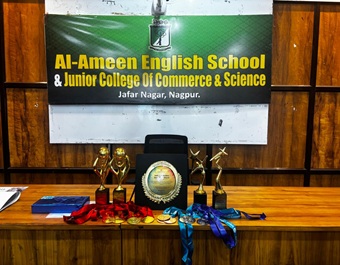
Years of Educational Excellence

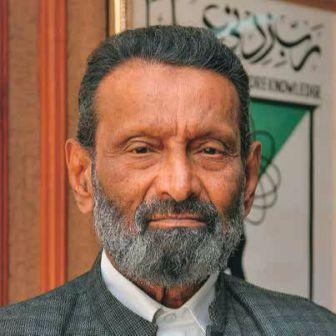
It was in the mind sixties that Dr. Mumtaz Ahmed Khan , the founder of AL-AMEEN MOVEMENT set about in a humble manner to build what is now the larger & thriving AL-AMEEN MOVEMENT. It has been dedicated to service of Indian masses at large in the areas of education, health, communication and overall economic upliftment.
For the AL-AMEEN MOVEMENT the major areas of focus have been:AL-AMEEN in education has kindled new hopes and prospects for new generation of young men and women. By the last count, more than 250000 students have had the benefits of being educated, under the able guidance of qualified and trained teachers spread over 250 plus institutions, technical institutes and colleges, managed by the Al Ameen Group of Institutions.
These educational institutions range from the simple structured education at Kindergarten level to the more demanding post graduate levels, covering a range of studies including Arts, Science, Commerce, Engineering, Pharmacy and Medicine, apart from specific job oriented courses in Polytechnic, Industrial Training Institutes etc.
In all these efforts, one unifying objective has been to produce bright young men & women fully equipped to secure useful employment or to go for self employment and to grow into upright citizens of the country.
When Dr. Mumtaz Ahmed Khan envisioned the Al-Ameen Movement, his aspiration went beyond
establishing educational institutions. He believed that meaningful change begins when
individuals are given the opportunity to learn, develop their abilities, and become confident
enough to shape their own future.
This belief became the foundation of an educational philosophy centred on knowledge, character,
discipline, and self-reliance. Education, in this vision, is not limited to classrooms or examinations;
it is a means of developing responsible individuals who understand their role in their families,
communities, and society.
The journey of Al-Ameen has therefore been guided by a simple principle — every learner deserves access
to opportunities that can help them discover their potential. By combining academic learning with
practical skills, values, and a sense of social responsibility, the Movement seeks to prepare young
people not only for employment, but also for meaningful and dignified lives.
Today, this founding philosophy continues to guide the institutions associated with Al-Ameen.
The commitment remains to create an environment where education opens doors, skills create opportunities,
and values shape individuals who can contribute positively to society.
Career Planning and Skill Development Trainings / for upliftment of youths & many more All COURSES ARE APPROVED BY Respective Statutory Agencies of Govt. Of India.

Al-Ameen Charitable Fund Trust, Nagpur, Maharashtra is a public Trust registered, with Bombay Public Trust Act 1950 bearing Registration No. E-2009(Nagpur) in the year 2007. All the Trustees of this trust are well qualified and professional in educational field. The main objective of trust is to provide quality technical / vocational. & value based education for holistic development of students capable of making valuable contribution to society in their respective fields of specialization. The trust is running Primary School, Montessori Teachers Training Institute, Junior College of Commerce & Science, Vocational Training Institute, Skill Development Training Institute, Distance Education School. In the area of Skill Development trainings the Trust providing courses in PAID COURSE MEDICAL LABORTARY TECHNICIAN and GENERAL DUTY ASSISTANT WHILE FREE COURSES ARE SAMPLING TAILOR, SUPERVISOR INTERIOR DESIGNING, TRADITIONAL HAND EMBROIDER, FASHION DESIGNER, WEB DESIGNING AND PUBLISHING ASSISTANT, DOMESTIC DATA ENTRY OPERATOR, PLUMBING SUPERVISOR, PLUMBER (MAINTENANCE & SERVICING) and other skill based courses and many more. The trust is conducting various types of skill program in association with State Govt. / Central Govt. agencies since last13 years for the upliftment of below poverty line community SC, ST and other Minority/ backword communities so that they can earn their lively-hood with dignity and honour or even they can setup their own employment/income generating units.
The organization is accredited with Premier technical / vocational / skill development / educational and
universities.
1) National Skill Development Co-operation (NSDC) under the ministry of Skill Development &
Entrepreneurship Govt. of India Empanelled as Training Provider with NSDC Registration No
TP ID : TP003637 with TC ID : TC050524 (Jafar Nagar Centre)
2) Directorate Of Vocational Education and Training (DVET), under Skill Development and Entrepreneurship
Department Govt. of Maharashtra Empanelled as Training Provider with DVET Registration No MSCVT/
VTI-2020 / PVT09988T (Jafar Nagar Centre)
3) Al-Ameen Junior College of Commerce and Science, Jafar Nagar, Nagpur affiliated to Maharashtra State
Board of Education bearing College bearing College Code 06 01 183.
4) Al-Ameen English School recognized by ministry of School Education Govt. of Maharashtra bearing
UDISE Code 27091501201.
5) National Institute of Open Schooling (NIOS), an autonomous organization under Ministry of Education
Govt. of India Empanelled as AI with NIOS Registration No M11128, M38349 for Secondary and MB1108317
for OBE (Jafat Nagar Centre)
Our vision for next 15 years is to “To provide unified access to the Minority communities for Education, Entrepreneurship and Skill Development Training Programmes for the skill sets, which are/will be in demand by the market leading to self/wage-employment, with emphasis on entrepreneurship, to promote “Skill India- Mission/ Make in India” To achieve the best we focus on world class education system to poor people. We are always ready to meet our education needs to poor child/People at all times. Our aim is at providing this high level of educational services to build successful person with carrier success. We strive hard to offer our students not just reactive service but also a proactive approach by using our knowledge, to not only provide excellent service but to also help guide our student in the most effective direction to his carrier.
Our mission for next 15 years is to “Promoting inclusive development process, by educating and skilling of Minority communities and poor communities, for providing sustainable education system leading to “SabkaSaath – SabkaVikas”.” And bringing about a Social change through quality primary education. The increasing social demands of the people, active involvement of the clientele groups dovetailing of resources with need, forging strong community expressions on increasing community development is the core vision of the organization where all people can gain access to education, healthcare, employment opportunities, economic self reliance. The emerging voluntary community leadership organization women self help movement at the grass root level , increased report with support groups, rising of skill endowment, empowerment of our masses and creation of community forces are the corner stones which are considers as the missions of the organization right from the beginning. Our focus on the human dignity of the poor and marginalized through an empowerment process and create opportunities for a sustainable society.
Create an end-to-end implementation framework for skill development, which provides opportunities for
life-long learning. This includes: incorporation of skilling in the school curriculum, providing opportunities
for quality long and short-term skill training, by providing gainful employment and ensuring career
progression that meets the aspirations of trainees. Align employer/industry demand and workforce
productivity with trainees’ aspirations for sustainable livelihoods, by creating a framework for outcome
focused training. Establish and enforce cross-sectoral, nationally and internationally acceptable standards
for skill training in the country by creating a sound quality assurance framework for skilling, applicable to
all Ministries, States and private training providers. Build capacity for skill development in critical un
organised sectors (such as the construction sector, where there few opportunities for skill training) and
provide pathways for re-skilling and up-skilling workers in these identified sectors, to enable them to
transition into formal sector employment. Ensure sufficient, high quality options for long-term skilling,
bench marked to internationally acceptable qualification standards, which will ultimately contribute to the
creation of a highly skilled workforce. Develop a network of quality instructors/trainers in the skill
development ecosystem by establishing high quality teacher training institutions. Leverage existing public
infrastructure and industry facilities for scaling up skill training and capacity building efforts. Offer a
passage for overseas employment through specific programmes mapped to global job requirements and
bench marked to international standards. Enable pathways for transitioning between the vocational training
system and the formal education system, through a credit transfer system. Promote convergence and co
ordination between skill development efforts of all Central Ministries/Departments/States/implementing
agencies.
Support weaker and disadvantaged sections of society through focused outreach programmes and
targeted skill development activities. Propagate aspirational value of skilling among youth, by creating
social awareness on value of skill training. Maintain a national database, known as the Labour Market
Information System (LMIS), which will act as a portal for matching the demand and supply of skilled
workforce in the country. The LMIS, will on the one hand provide citizens with vital information on skilling
initiatives across the country. On the other, it will also serve as a platform for monitoring the performance
of existing skill development programmes, running in every Indian state. Addressing the long-term and
short-term skilling needs through revamp of existing institutional training framework and establishing new
institutions, undertake sector specific skill training initiatives, ensure convergence of existing skill
development programmes, leverage existing public infrastructure for skilling, focus on training of trainers,
promote sustainable livelihoods. To drive quantity, quality and reach of training provision and outcomes.